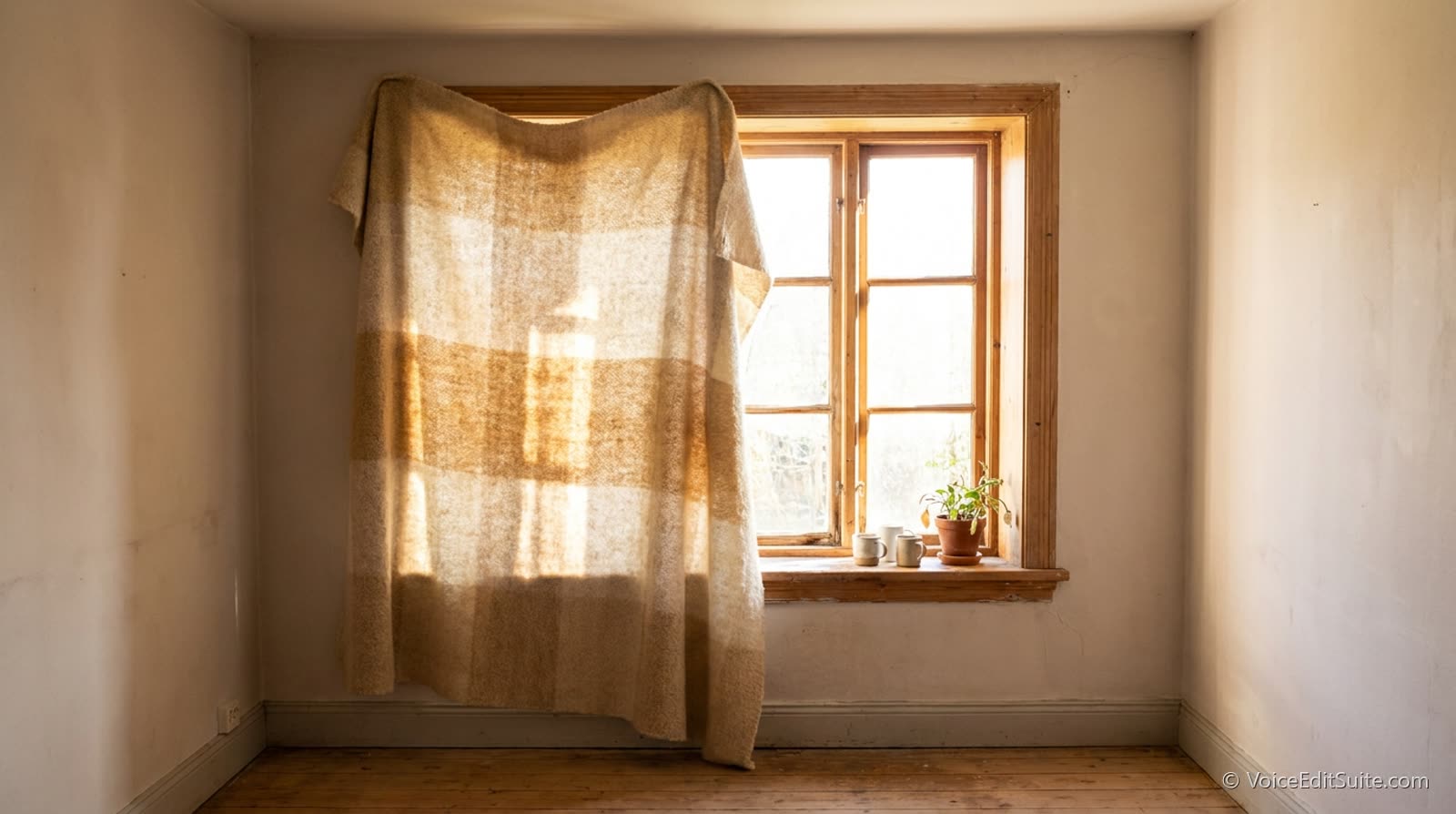
Walk around most home studios with a decibel meter and the window is where the numbers jump. Walls are thick, load-bearing, and full of mass; a window is a pane of glass a few millimeters thick sitting in a frame that was built to open, which means it was never built to seal. Acoustic treatment on a budget usually focuses on absorbing reflections inside the room, and that matters, but it does nothing for sound coming in from the street, because that is not a reflection problem, it is a leak problem. Leaks need mass and seals, not foam.
Mass, Not Foam
Sound is blocked by density and weight, not by softness. A heavy moving blanket or a thick, floor-to-ceiling curtain hung with extra fabric pooling on the floor and overlapping the wall on both sides does more against outside noise than any foam panel, because foam is designed to absorb reflections inside a room, not to stop sound from crossing a boundary. The blanket needs to actually cover the glass edge to edge with slack, not hang flat and taut, since a taut blanket lets sound flex it like a drumhead while a loose, heavy one damps that motion.
- Double up. Two layers, a moving blanket against the glass and a heavy curtain over that with a gap of a few centimeters between them, block meaningfully more than either alone, because the air gap between two dense layers is doing real acoustic work.
- Seal the frame, not just the glass. Most of a window's leak is around the frame, not through the pane. A temporary acoustic sealant strip or even painter's tape and a rolled towel along the sill closes the gap air and sound both use to get in.
- A window insert, if you can justify the cost. A removable acrylic panel that sits inside the existing frame, sold for exactly this purpose, adds a second sealed layer of glass-equivalent mass without any permanent change to the window.
- Draft stoppers at the sill, the kind sold for keeping heat in, do double duty against sound, since the gap they close is the same gap letting noise through.
What Actually Reduces the Level
The order matters because it is the opposite of what most people buy first. Foam is the cheapest, most visible product marketed for this problem, and it is the least effective one here, because it was designed for a different problem entirely, room reflections rather than outside leakage. A twelve-dollar moving blanket and an afternoon sealing the frame gaps will out-perform a wall of foam tiles against traffic noise specifically, every time.
Knowing What a Soft Fix Cannot Do
None of this makes a single-pane window into a recording studio wall, and it should not be sold to yourself as that. A blanket and a sealed frame typically knock several decibels off a steady, moderate noise like distant traffic or a neighbor's air conditioner; they do not stop a passing siren, a jackhammer, or bass from a car stereo, because those carry too much low-frequency energy for a soft, light layer to block. Recording in an apartment is as much about scheduling around the noise you cannot beat as treating the noise you can, and a window fix is one tool in that kit, not the whole kit.
A heavy blanket sealed tight against a cold window for weeks at a time can trap moisture against the glass, which is worth watching if you live somewhere humid; temperature and humidity swings affect microphones and interfaces too, so treat the window setup as something you put up before a session and can air out between them, rather than a permanent fixture.
↗ Try the tool
Home Studio Analysis
Measure before you buy anything. Home Studio Analysis is free and reports your actual noise floor from thirty seconds of audio, so you know whether the window is really the source before spending on blankets or an insert.
Open Home Studio Analysis →Frequently Asked Questions
What is the cheapest window fix that actually works?
A moving blanket, bought for around ten to fifteen dollars, hung with slack over the glass and overlapping the frame on all sides. It is unglamorous and it is the best return on money on this whole list.
Does double glazing already solve this?
It helps against high-frequency noise like conversation and generally reduces the overall level, but standard double glazing is optimized for heat retention, not sound, and low, rumbling noise like traffic and bass still gets through more than people expect. The same blanket-and-seal approach is still worth doing over double glazing.
Should I just record when the street is quiet instead?
Yes, alongside treating the window, not instead of it. Late morning on weekdays and late evening are usually the quietest predictable windows in most residential areas. Combine the timing with the blanket-and-seal setup and most home studios get close enough to a workable noise floor for everyday jobs.