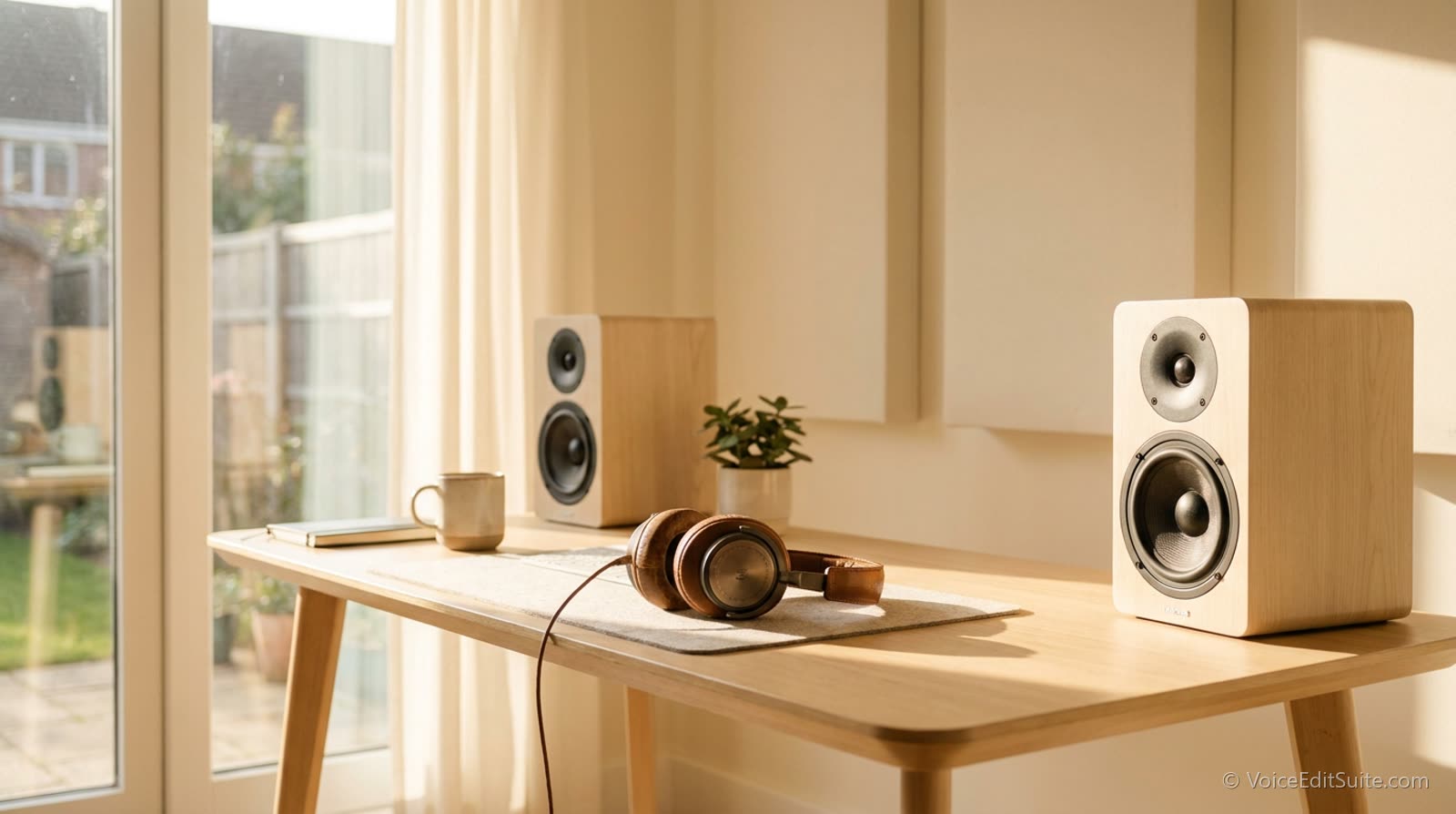
The honest answer for most home voice over setups is that closed-back headphones should be the primary monitoring tool, and studio monitors are a genuine upgrade only once a room has been treated well enough to make them trustworthy. That order matters more than the specific models involved, because getting it backward, buying monitors before the room can support them, produces a setup that actively misleads you about how a recording actually sounds.
What Headphones Solve That Monitors Cannot
A pair of closed-back headphones delivers a consistent listening experience regardless of the room around you: no reflections off untreated walls, no risk of speaker output bleeding into an open microphone during a live session, and full portability to a hotel room, a client's booth, or anywhere else work happens. For anyone still treating a home studio on a budget, headphones sidestep the room problem entirely rather than requiring you to solve it before monitoring becomes trustworthy.
- No bleed risk. Monitor speakers playing back into a live, open microphone can reintroduce sound into the very recording you are checking. Headphones cannot do this.
- Room-independent. A treated room is not a prerequisite for headphones to sound consistent from session to session.
- Portable. The same pair travels to a hotel, a booth rental, or a client site, which a pair of monitors and their stands cannot do.
- Lower total cost. One purchase, without the acoustic treatment that monitors need to actually perform accurately.
What Monitors Solve That Headphones Cannot
Headphones sit directly against your ears, which flatters certain frequency ranges and can mask problems that only show up when sound has to travel through open air, the way it will for anyone who eventually listens to your file on a laptop speaker, a car stereo, or a conference room system. Studio monitors, in a room with enough acoustic treatment to control reflections, reveal how a recording actually translates to real-world playback in a way headphones structurally cannot replicate. This matters most for editors doing critical mix decisions on longer-form work, audiobook chapters or narration passes where subtle EQ and compression choices compound over an hour of material.
Monitors in an untreated room can mislead you more than headphones ever would
Untreated parallel walls create standing waves that boost or cancel specific frequencies unevenly across the room. A mix that sounds correct on monitors in that space can sound noticeably wrong everywhere else, which defeats the entire purpose of monitoring in the first place.
The Practical Order: Headphones First, Monitors as a Deliberate Upgrade
For anyone recording and editing primarily from a closet, a treated corner, or a small home office, a genuinely good pair of closed-back headphones is very likely the better first purchase and may remain the primary tool indefinitely. Monitors become worth the investment specifically once acoustic treatment is already in place and the workflow includes enough critical listening, long-form editing, detailed mix work, matching a reference track precisely, to benefit from full-range, room-translated sound. Buying monitors as a first step, before addressing the room, tends to produce worse monitoring than a solid pair of headphones would have, not better.
A reasonable middle path many working voice actors settle into is exactly that: headphones as the everyday, portable default, and monitors added later as a second reference once the audio interface and room are already solid enough to make the upgrade meaningful rather than wasted.
↗ Try the tool
Home Studio Analysis
Free to try: the Home Studio Analysis tool checks your actual recording environment, so you know whether your room is ready for monitors or whether headphones should stay the primary tool for now.
Open Home Studio Analysis →Match the Tool to the Room You Actually Have
Headphones are the safer, more portable, lower-cost default for the vast majority of home voice over setups, and studio monitors are a real upgrade only once a room can support what they reveal. Getting that order right saves money on gear that would otherwise underperform and, more importantly, keeps you from trusting a monitoring setup that is quietly lying to you about how your recordings actually sound.